If your cutting board smells weird, stains easily, or slips mid-chop, it makes cooking feel harder than it needs to be.
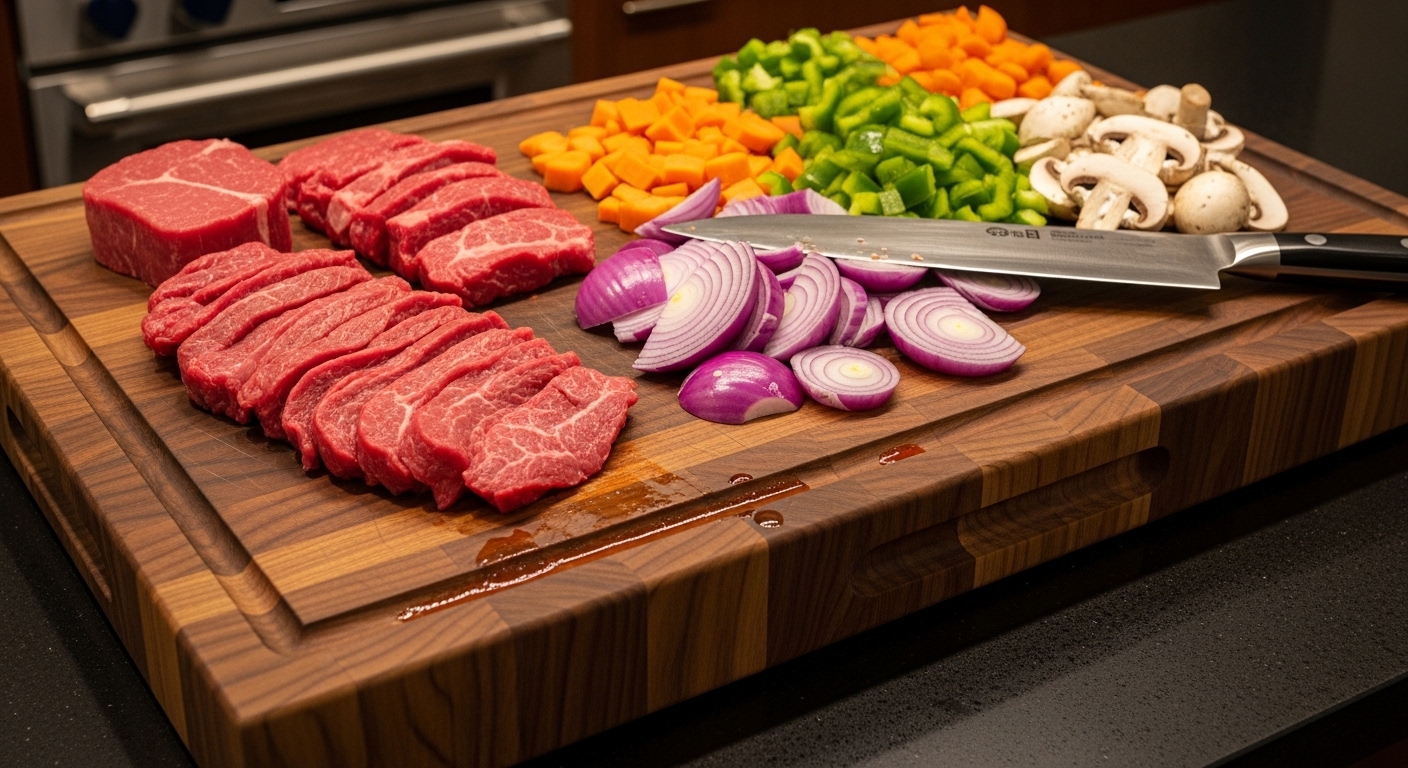
The right board should be stable, easy to clean, and sized for real meal prep—especially when you’re switching between raw meat and veggies.
Disclosure: Some links may be affiliate links. As an Amazon Associate I earn from qualifying purchases.
What to Look For (Home-Kitchen Priorities)
- Food safety: ideally use separate boards for raw meat and produce.
- Odor control: some materials hold onion/garlic/meat smells more than others.
- Knife-friendliness: softer surfaces are easier on your blade edge.
- Cleaning reality: “dishwasher-safe” only matters if it actually survives repeated cycles.
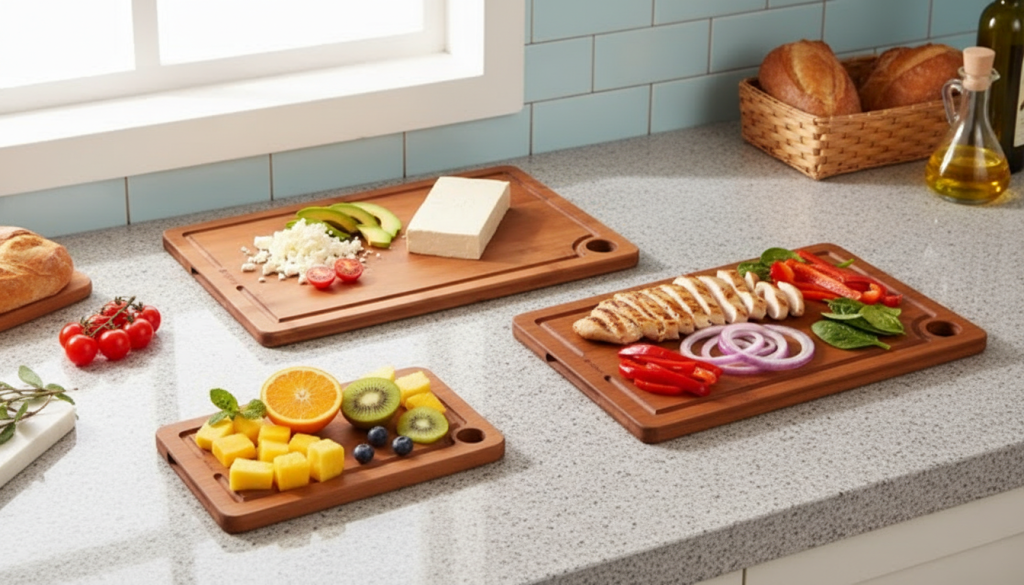
1) BNBUN Bamboo Cutting Board Set (juice grooves + handles)
Why it’s a good pick
This is the “set that makes life easier.” Multiple boards means you can separate meat, veggies, and bread without juggling one board all night. The juice grooves help keep liquids from running onto your counter, and the handles make it easier to move food to the pan.
Best for
- Busy weeknight prep (veg on one board, meat on another)
- People who like a bigger surface and less counter mess
Pros
- Multiple sizes = easier food separation
- Juice groove is genuinely useful for juicy proteins and tomatoes
- Bamboo is fairly gentle on knives
Cons
- Bamboo can hold odors if you don’t wash/dry promptly
- I wouldn’t treat bamboo as “everyday dishwasher material” long-term
My take: Great value if you want an easy system: “this board for veg, that board for meat.”
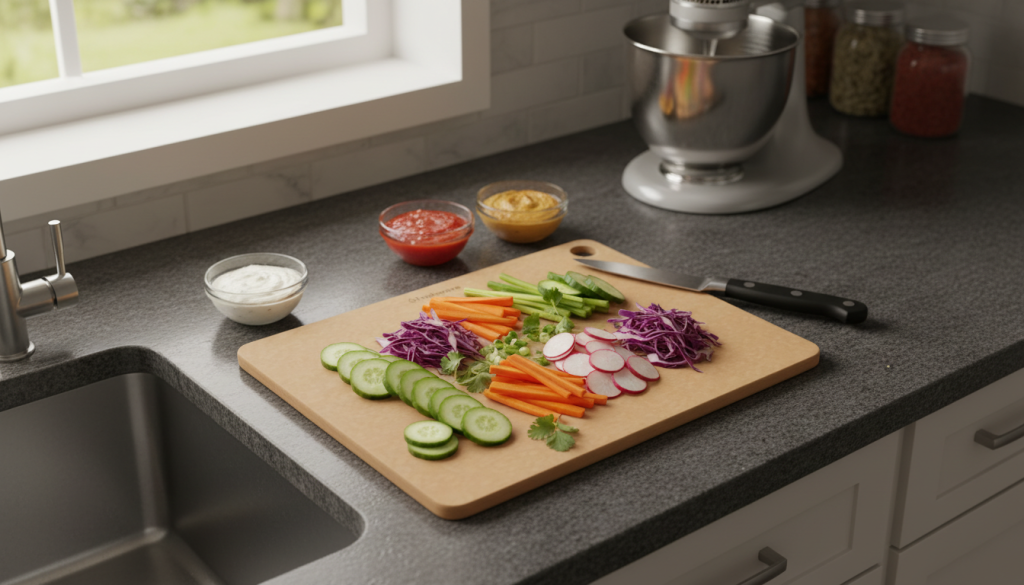
2) Freshware Large Wood Cutting Board (thick, simple, classic)
Why it’s a good pick
If you want that solid “real cutting board” feel, this style is it. A larger wood board is awesome for chopping piles of onions, prep for stir-fries, or carving cooked meat. Wood also tends to feel quieter and more pleasant under the knife.
Best for
- Veggie-heavy meal prep
- Anyone who wants one big board that stays put
Pros
- Comfortable cutting feel (nice control, less “clacky”)
- Generally good for odor if cleaned quickly
- Looks good on the counter (also works as a serving board)
Cons
- Needs basic care (hand wash, dry right away)
- “Dishwasher safe” claims aside, wood is safest as hand-wash only
My take: I love a big wood board for vegetables, but I keep raw-meat prep on something that can take hot dishwasher cycles.
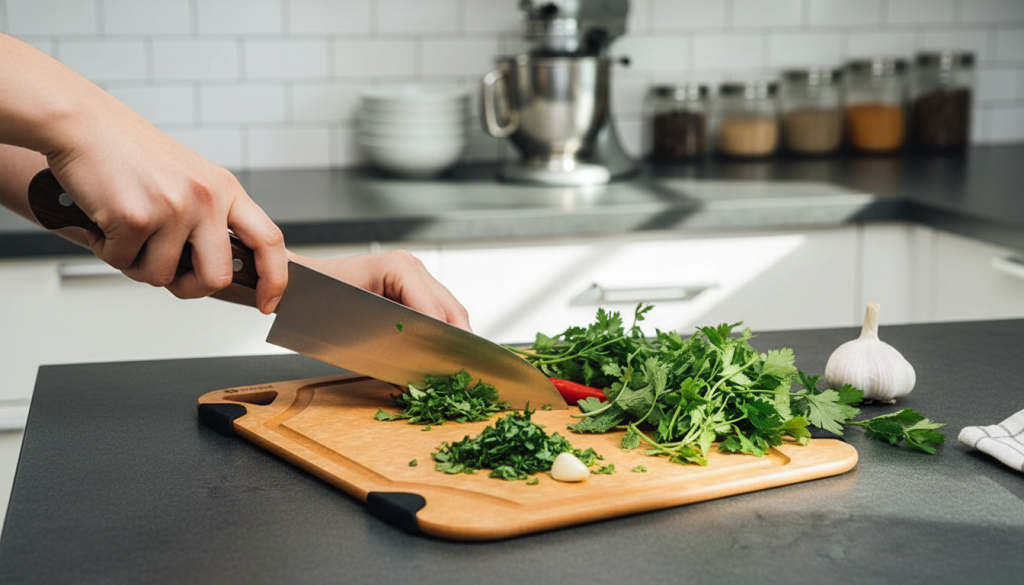
3) Toptier Wood-Fiber Composite Cutting Board (dishwasher-safe, non-porous feel)
Why it’s a good pick
This is the “best of both worlds” style for a lot of kitchens: it has a firmer, cleaner feel than many woods and is built for easy cleanup, including dishwasher use. It’s a great choice if you want a board that feels more premium than plastic but still keeps maintenance simple.
Best for
- People who want true low-fuss cleaning
- Mixed prep (veggies + proteins) with less worry about lingering smells
Pros
- More dishwasher-friendly than typical wood/bamboo
- Less odor cling compared to many natural boards
- Stays looking cleaner with less babying
Cons
- Firmer feel than wood (some people prefer softer boards)
- Still benefits from quick rinse before the dishwasher if you cut sticky foods
My take: If you want “actually easy to live with,” this is a strong everyday board.
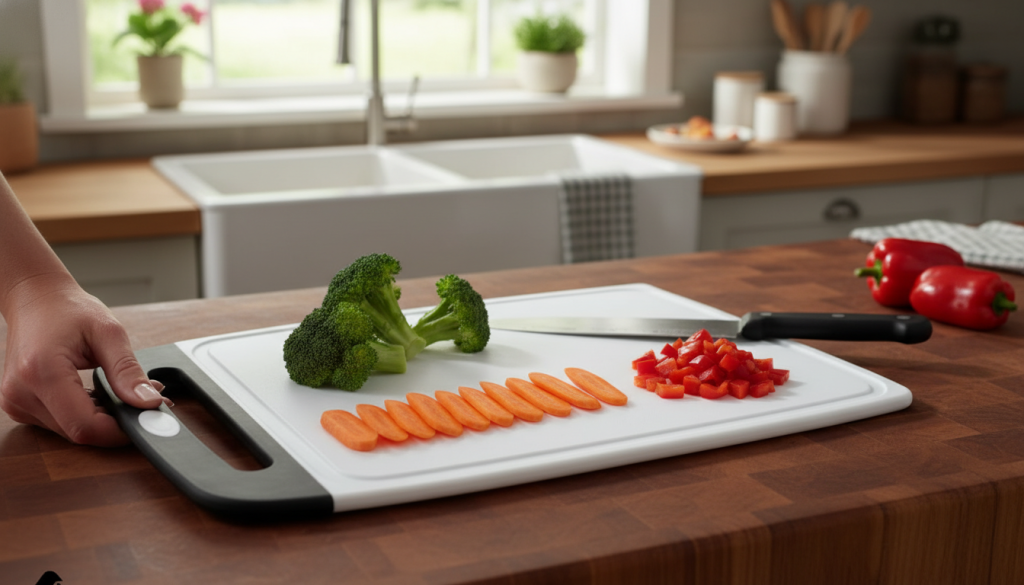
4) Gorilla Grip Reversible Plastic Cutting Board Set (nonporous, juice grooves, slip-resistant)
Why it’s a good pick
For raw meat, plastic is hard to beat because you can sanitize it aggressively. A set gives you separation (huge for food safety), and reversible boards are handy—one side for meat, the other for produce if you’re careful and clean between.
Best for
- Raw meat and fish
- Anyone who wants the most dishwasher-friendly option
Pros
- Dishwasher cleaning is straightforward (hot cycle = peace of mind)
- Multiple boards makes safe separation easy
- Juice groove helps with messy proteins
Cons
- Knife marks happen over time (normal, but they do add up)
- Can hold strong odors if not cleaned quickly after garlic/onion (dishwasher helps)
My take: This is my “no-stress” choice for raw meat. The set format makes it easy to keep things hygienic.
Wood vs Plastic (Quick, Honest Comparison)
Wood/Bamboo
- Feels nicer to cut on and is gentler on knives
- Can absorb odors if you leave it wet or don’t dry it fast
- Best for veggies, bread, and general prep (hand-wash recommended)
Plastic
- Best for raw meat because it’s easy to sanitize
- Knife marks are unavoidable, and deep grooves mean it’s smart to replace eventually
- Truly dishwasher-friendly in daily life
Composite (wood-fiber style)
- The “middle path”: easier cleaning than wood, nicer feel than many plastics
- Great if you want one board that behaves well with regular washing
Best Overall Pick
✅ Best Overall: Toptier Wood-Fiber Composite Board
It hits the sweet spot: low odor cling, easy cleaning, and realistic dishwasher use—without feeling like a flimsy plastic board.
Best for Raw Meat: Gorilla Grip Plastic Set
If food safety and easy sanitizing are your priority, this is the simplest, most practical option.
Best Setup if You Cook a Lot: BNBUN Bamboo Set + One Plastic Board
Bamboo set for veg + a dedicated plastic board for meat = the combo that keeps prep fast and your kitchen feeling cleaner.
Simple Odor-Control Tips (That Actually Work)
- Rinse immediately after cutting onions/garlic or raw meat juices.
- For wood/bamboo: wipe with lemon + coarse salt, then rinse and dry.
- Don’t air-dry flat on the counter—stand it upright so both sides dry fully.
- If a plastic board gets deeply grooved and stays smelly even after hot washes, it’s time to retire it.