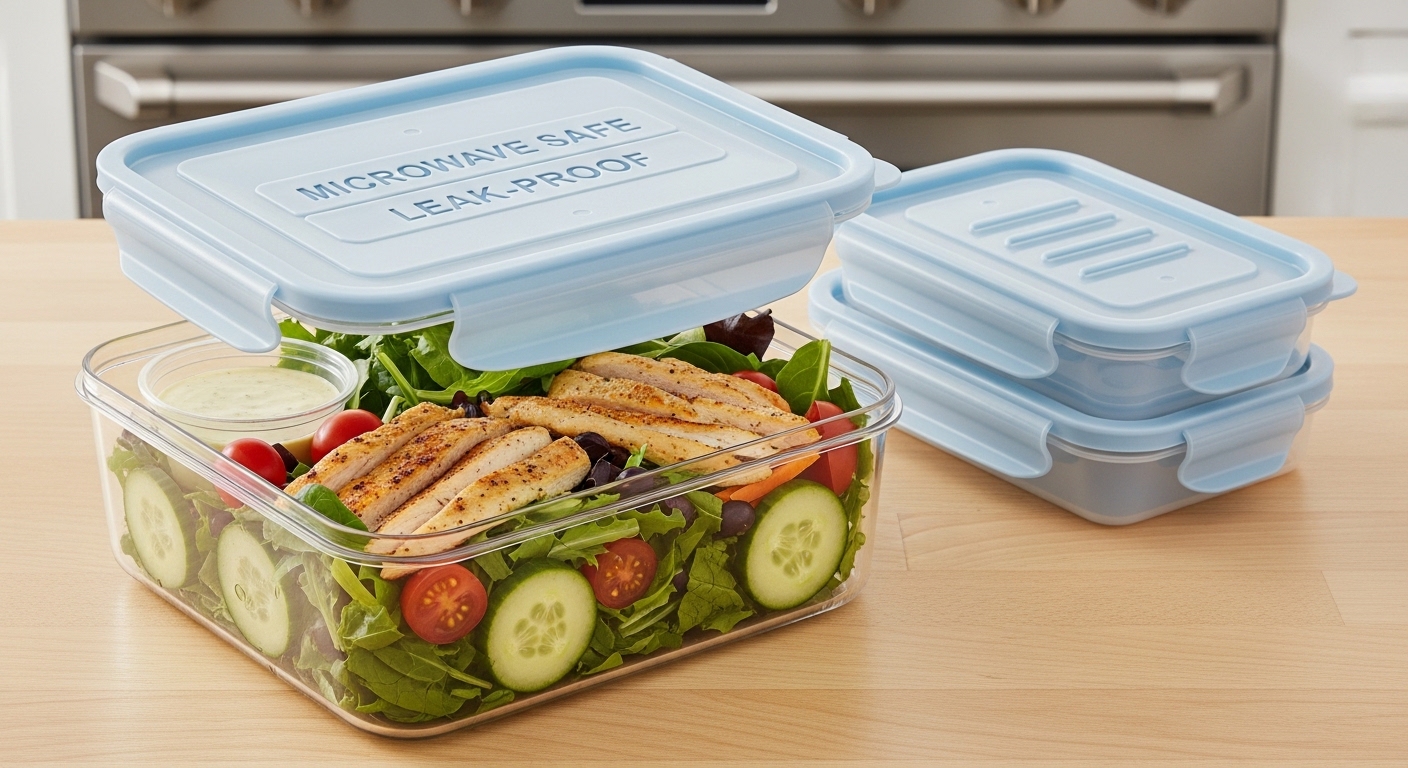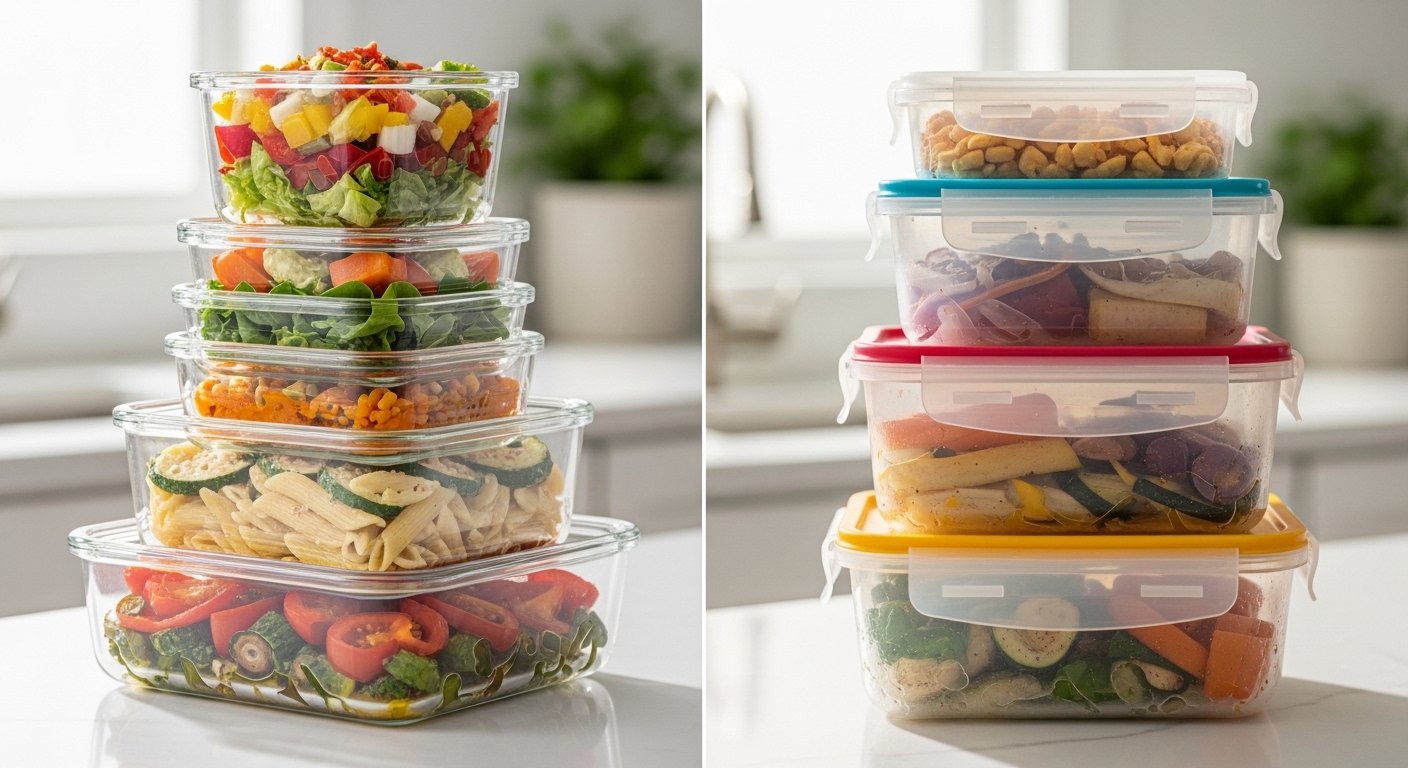
Food containers seem simple—until your leftovers taste “fridgey,” your lids warp, or tomato sauce stains everything orange.
Glass and plastic can both work great, but they win in different ways. The right choice depends on what you store, how you reheat, and whether you’re packing meals to go.
Disclosure: Some links may be affiliate links. As an Amazon Associate I earn from qualifying purchases.
Quick Answer (If You Just Want the Decision)
- Choose glass if you care most about taste, stains/odors, and reheating—especially for saucy foods.
- Choose plastic if you care most about lightweight, portability, and convenience—especially for lunches and bulk sets.
If you meal prep often: glass at home + plastic for carry is a smart combo.
Taste & Smell: Who Wins?
✅ Winner: Glass
Glass is nonporous, which means it doesn’t absorb odors and rarely affects flavor. That’s why leftovers in glass often taste “cleaner,” especially with strong foods like curry, garlic, kimchi, or fish.
Plastic reality
Plastic can hold onto smells over time, especially if you store:
- tomato sauces
- oily foods
- onions/garlic-heavy meals
- spicy or curry-based dishes
Best takeaway: If taste matters to you, glass is the easiest win.
Stains: The Tomato Sauce Test
✅ Winner: Glass
Glass doesn’t stain in normal use. Plastic can stain—sometimes fast—depending on the plastic type, finish, and how hot the food is when stored.
If you hate orange containers: go glass.
If you use plastic: rinsing quickly helps a lot. Long storage with oily red sauce is what really locks stains in.
Durability: Drops, Cracks, and Real-Life Abuse
Plastic durability
- Drop-resistant and generally safer for kids
- Handles everyday knocks well
- Lids can warp or crack over time (often the first failure point)
Glass durability
- The container body is durable in daily use but can break if dropped
- Excellent for long-term use if you’re careful
- Glass usually outlasts plastic in “staying nice,” but not in surviving falls
Simple rule: if you’re clumsy or packing containers for kids, plastic can be less stressful.
Microwave & Reheating: What’s Actually Better?
✅ Winner: Glass (for reheating comfort)
Glass reheats evenly and doesn’t pick up lingering smells. Many people also prefer glass because it feels more stable for hot foods.
Plastic reheating
Plastic is convenient, but:
- some plastics can warp with repeated heat exposure
- sauces can “bake in” odors/stains faster
- lids are more likely to deform if microwaved sealed
Best practice for both: vent or remove lids during microwaving.
Weight & Portability: Who Wins?
✅ Winner: Plastic
Plastic is lighter and easier to carry, especially if you’re packing multiple meals, snacks, or a full day of food.
Glass is heavier and can feel annoying if you commute, walk, or carry a packed bag.
Leak Resistance: It’s More About the Lid Than the Material
Leak resistance depends mostly on:
- lid design (snap-lock, gasket, tight seal)
- how full the container is
- whether you’re storing liquid/steam-hot foods
Glass often comes with stronger lid systems in meal-prep style sets, but plastic can be equally leakproof if the lids are well-designed.
Cleanup: Dishwasher, Grease, and “Will I Actually Wash This?”
Glass (usually easier for stuck-on sauce)
- Stuck sauces often release more cleanly
- Doesn’t hold oil smells
- Feels “fresh” longer
Plastic
- Easier to handle in the sink (lighter)
- Can hold grease film and odors if not washed thoroughly
- Scratches can build up, making it feel harder to keep “like new”
Cost: What’s Worth Paying More For?
Glass costs more upfront, but it can be worth it if:
- you meal prep weekly
- you store sauces often
- you care about taste/odors
- you reheat in the container frequently
Plastic is worth it if:
- you need lots of containers (family, snacks, school lunches)
- you lose containers (office, roommates)
- you prioritize lightweight and convenience
The Optimal Choice (Most People)
✅ Best overall setup: Glass at home + Plastic for on-the-go
- Use glass for leftovers, saucy meals, and reheating.
- Use plastic for packed lunches, kids, and carry-heavy days.
If you want only one:
- Choose glass if you’re cooking at home and reheating often.
- Choose plastic if you’re commuting daily and carrying food regularly.
Quick Decision Guide (Pick Your Winner)
Choose Glass if you:
- hate stains and odors
- meal prep sauces, curries, or tomato-based foods
- reheat leftovers often
- want the cleanest taste
Choose Plastic if you:
- carry meals daily
- want lightweight containers
- need a big set for organizing
- have kids or drop-things tendencies
FAQs (SEO-Friendly)
Does plastic change the taste of food?
It can over time, especially with strong-smelling foods and older containers with scratches.
Is glass always oven-safe?
Often the glass base is oven-safe, but lids usually are not. Always heat glass without the lid.
How do I reduce plastic stains?
Rinse quickly, don’t store oily tomato sauces for long, and avoid microwaving sealed lids.