A “better” chef’s knife isn’t always the sharper one. The best knife is the one that matches how you cook, how you prep, and how much maintenance you’re realistically going to do.
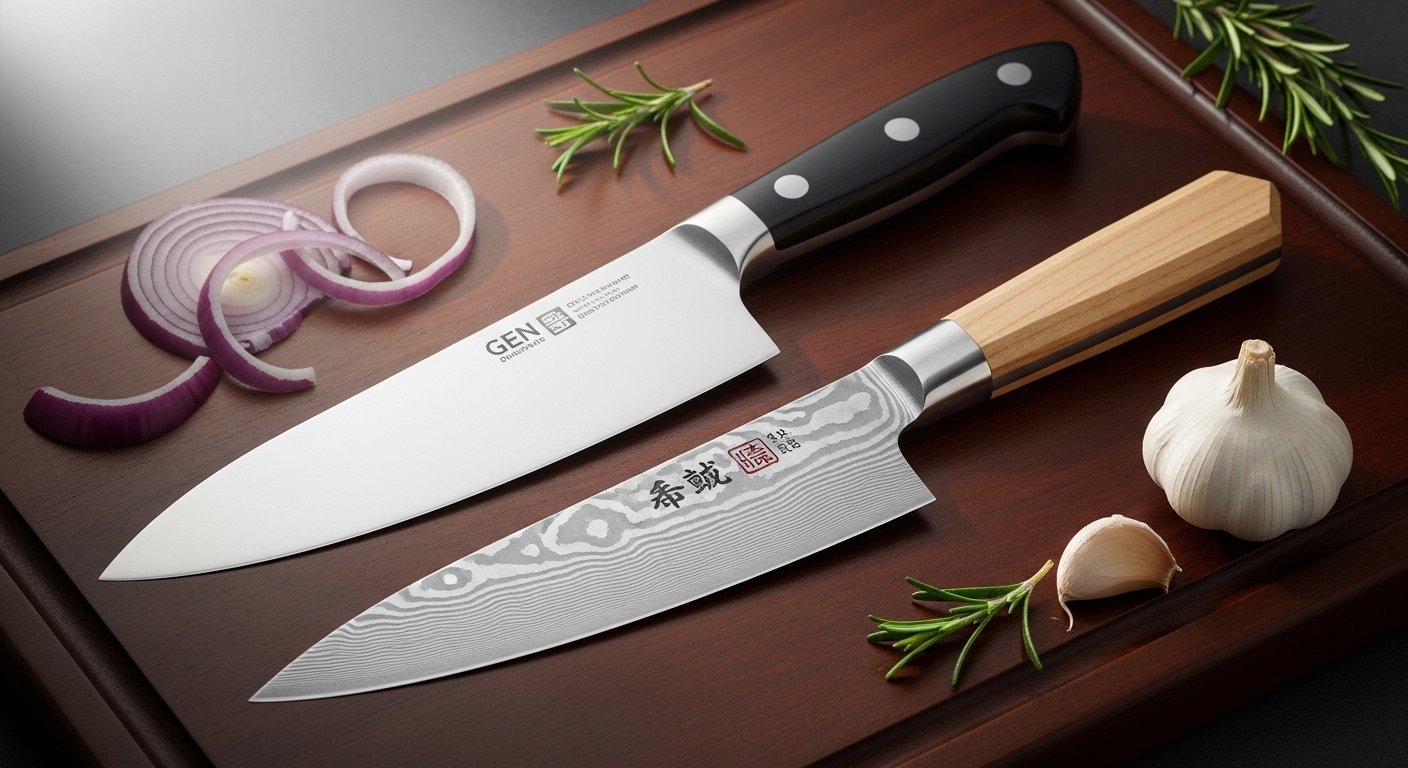
German and Japanese chef’s knives can both be excellent—but they feel very different in real kitchens, and that’s why one can seem “too sharp” (or too delicate) at first.
Disclosure: Some links may be affiliate links. As an Amazon Associate I earn from qualifying purchases.
Quick Answer: The Right Knife Depends on Your Habit
- Pick a German-style chef’s knife if you want a durable, forgiving daily workhorse (and you cut through tougher stuff).
- Pick a Japanese-style chef’s knife if you want effortless slicing and super clean cuts (and you’re willing to be a little gentler).
Key Differences (In Plain English)
1) Edge Angle & Sharpness Feel
- German knives are usually sharpened to a wider edge angle (often around 20° per side in many mainstream lines).
What you feel: stable, less “bitey,” more forgiving if your technique isn’t perfect. - Japanese knives are often sharpened to a narrower angle (commonly around 15° per side, sometimes even less depending on the knife).
What you feel: very sharp, glides through food—sometimes so sharp it feels scary.
Why Japanese can feel “too sharp”:
Because the edge is thinner and bites immediately. If you’re used to pushing harder with a duller knife, that habit + a thin edge can feel unpredictable at first.
2) Steel Hardness & Edge Retention
- German (softer steel, generally):
Tends to be tougher and more forgiving. It may dull a bit faster, but it’s easier to touch up. - Japanese (harder steel, often):
Holds a sharp edge longer, but can be more prone to chipping if abused.
Real-life takeaway:
If you want a knife you can baby less, German is usually calmer. If you want a knife that stays razor-sharp longer and you’re careful, Japanese is satisfying.
3) Blade Profile & Cutting Style (Rocking vs Push-Cut)
- German knives: often have more belly (curve).
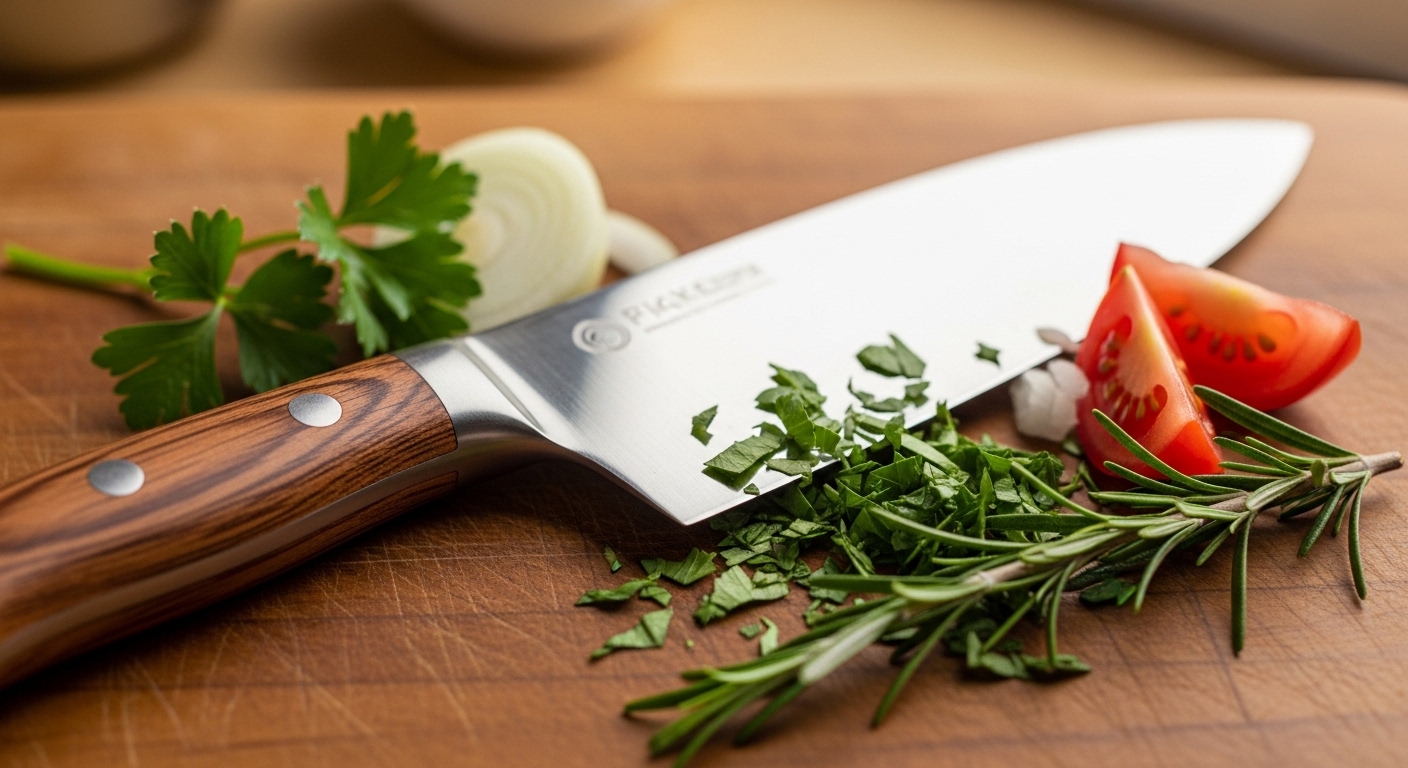
Best for: rocking through herbs, garlic, quick chopping. - Japanese knives: many have a flatter profile (varies by model).
Best for: push-cuts, clean slicing, precise veggie prep.
If you rock-chop a lot: German usually feels more natural.
If you push-cut and slice: Japanese often feels smoother and cleaner.
4) Weight & Balance
- German: typically a bit heavier, feels solid, reassuring.
- Japanese: often lighter, faster, more “nimble” in hand.
What this means:
If your hands get tired during prep, a lighter Japanese knife can feel easier. If you like a “let the knife do the work” weight, German can feel better.
Pros & Cons (Honest, Home-Kitchen Version)
German Chef’s Knives
Pros
- More forgiving on cutting technique
- Better for tougher tasks (hard squash, thick stems, heavier prep)
- Less likely to chip with normal home use
- Easier to maintain with basic honing
Cons
- May not feel as “laser sharp” through delicate slicing
- Can wedge slightly more in dense foods (carrots, sweet potatoes)
- Might need more frequent touch-ups
Best for you if…
- You want one knife that handles almost anything
- You cook a mix of meats + veggies
- You don’t want to think too much about maintenance
Japanese Chef’s Knives (Gyuto style)
Pros
- Extremely clean slicing; effortless through onions, herbs, proteins
- Often stays sharp longer (depending on steel)
- Light and precise—great for detailed prep
Cons
- Can chip if used like a “tough knife” (bones, frozen food, twisting in cuts)
- Less forgiving if you scrape the board with the edge or cut on hard surfaces
- May require more careful sharpening habits
Best for you if…
- You prep lots of vegetables and want perfect slices
- You care about precision and “smooth glide” cutting
- You’re okay being a bit gentle and intentional
Side-by-Side: Which One Fits Your Cooking Style?
Choose German if you…
- Rock-chop herbs and garlic often
- Cut tougher foods (hard squash, thick root veg)
- Want a knife that forgives mistakes
- Prefer low-maintenance habits
Choose Japanese if you…
- Do lots of slicing (onions, proteins, tomatoes)
- Like push-cutting and precise prep
- Want “wow” sharpness and clean cuts
- Don’t mind being careful about what you cut and how you handle the blade
“Too Sharp” Explained (And How to Fix the Feeling)
If a Japanese knife feels “too sharp,” it’s usually one of these:
- You’re using too much force.
With a thin edge, light pressure is the whole point. Try letting the knife fall through the cut. - You’re twisting or prying mid-cut.
Thin edges hate twisting. Keep cuts straight, especially in dense foods. - You’re scraping the edge across the board.
Flip the knife and scrape with the spine (back), not the edge. - Your cutting board is too hard.
Avoid glass, stone, and super-hard bamboo. Use quality wood or softer plastic.
The Optimal Choice (Most Home Cooks)
✅ Best Overall for Most Home Kitchens: German Chef’s Knife
If you want the safest “one knife for everything” pick, German-style wins because it’s forgiving, durable, and low-stress. It’s the knife you’ll actually use daily without worrying.
✅ Best Upgrade for Veggie-Heavy Cooks: Japanese Gyuto
If your cooking is mostly vegetables + boneless proteins, and you want that smooth, clean cutting experience, Japanese is the more satisfying choice—as long as you treat it gently.
My Simple Recommendation (Pick in 10 Seconds)
- Busy home cook, wants easy + durable: German
- Loves precision slicing, veggie prep, clean cuts: Japanese
- Only buying one knife and you’re not sure: German
- Already have a beater knife for rough jobs: go Japanese for your “nice knife”
Quick FAQ (SEO-Friendly)
Can I own both?
Yes—and it’s the best setup. Use German for rough/tough jobs and Japanese for clean slicing.
Do Japanese knives chip easily?
They can if misused (bones, frozen food, twisting). Used properly on the right board, they’re totally fine for daily cooking.
Do I need to sharpen differently?
You’ll want to maintain the original edge angle. Many people use guided sharpeners or professionals to keep it consistent.