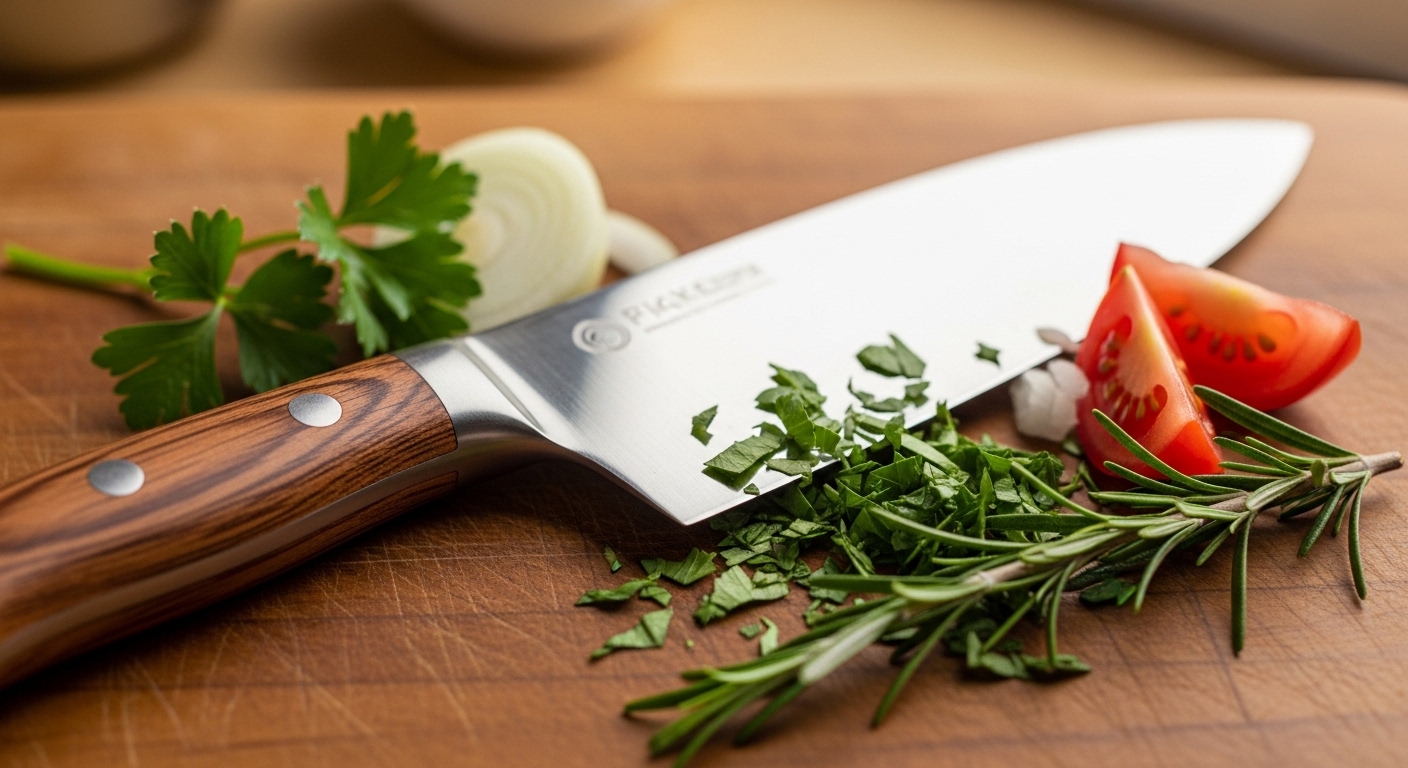
A sharp knife makes cooking faster, safer, and way less frustrating.
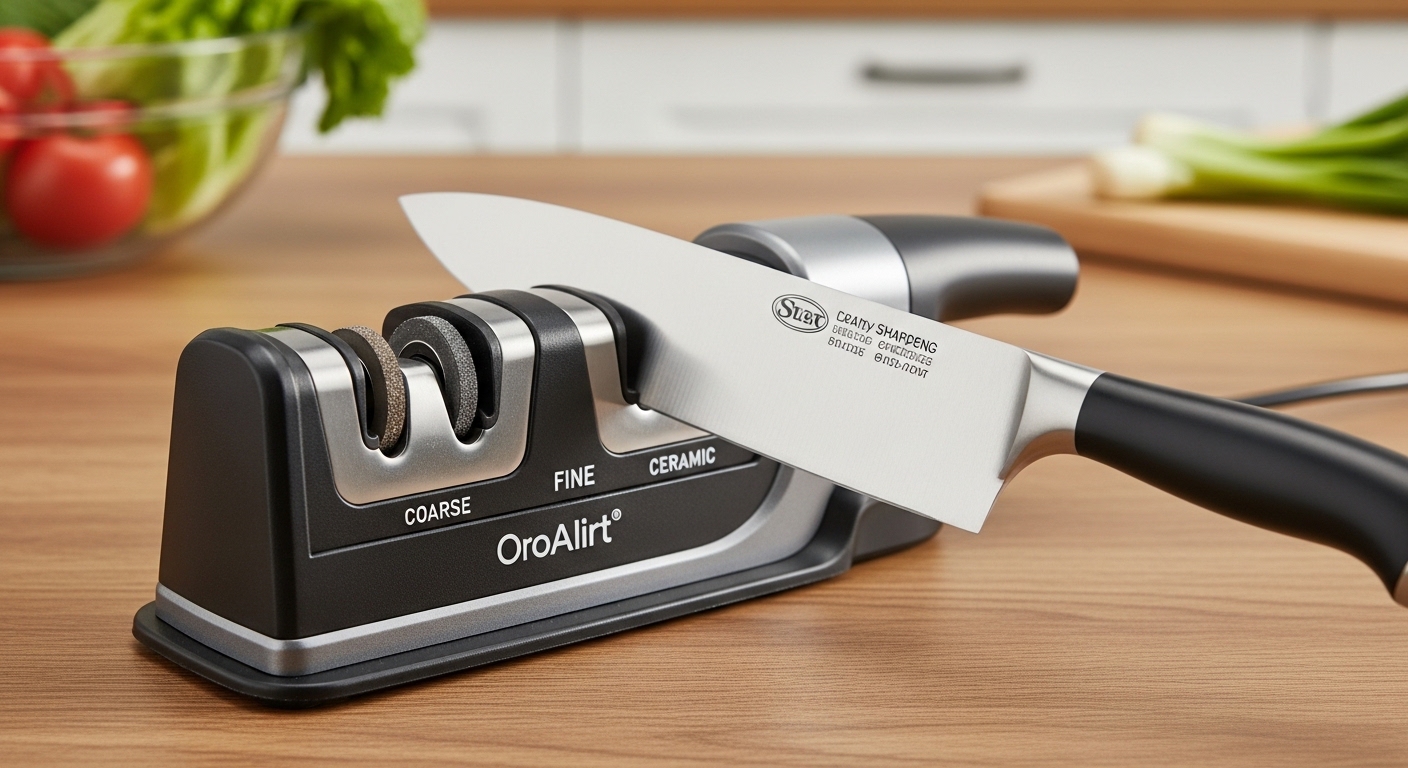
If you’re a beginner, the right sharpener should feel easy, guided, and hard to mess up—not like a complicated hobby.
Disclosure: Some links may be affiliate links. As an Amazon Associate I earn from qualifying purchases.
Quick Guide: Electric vs Manual (Beginner Reality)
Electric sharpeners are the easiest path to “wow, that’s sharp again” with minimal technique—especially if they have angle guides. Great for busy home cooks.
Manual options (pull-throughs, whetstones, guided systems) can be cheaper or more precise, but they’re more technique-dependent. If you know you won’t practice, electric is usually the better beginner choice.
About angles (this matters)
- 15°: often better for thinner, Japanese-style edges and slicier cuts.
- 20°: common for Western/German-style knives and everyday durability.
What I Look For in a Beginner Sharpener
- Clear angle guides (so you’re not guessing)
- Staged sharpening (coarse → refine → polish)
- Consistency (repeatable results even with basic technique)
- Safety + stability (doesn’t slide around, easy to control)
- Low-fuss cleanup (you’ll actually use it)
1) 3-Stage Electric Sharpener (15° Precision Angle Guide, Stainless Body)
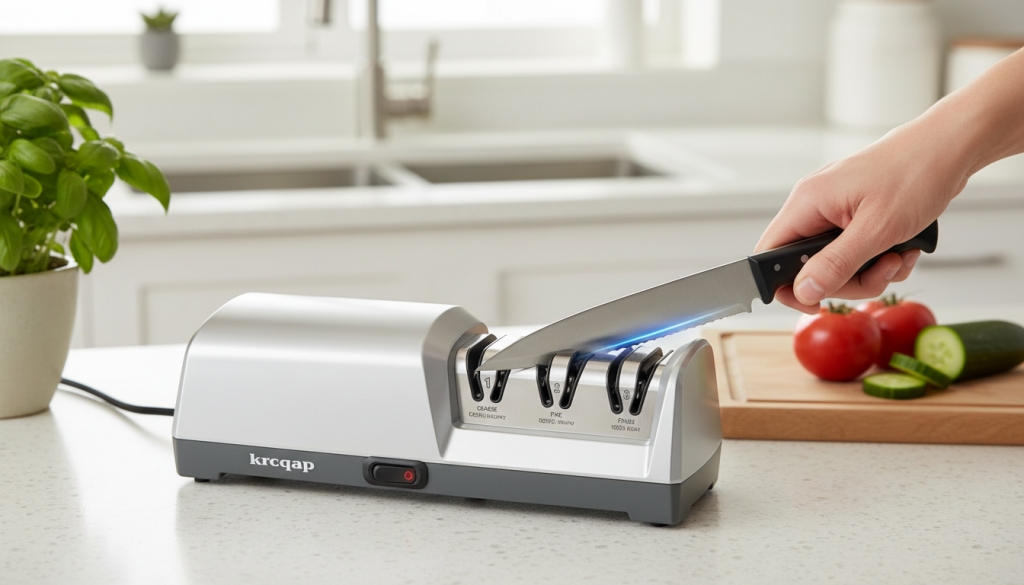
Why it’s beginner-friendly
The 15° angle guide is the big deal here. If your knives are thinner or you like a sharper, slicier feel, this helps you get there without needing skill.
Best for
- People with Japanese-style knives (or knives that feel thin and slicey)
- Home cooks who want a noticeably sharp edge quickly
Pros
- Guided 15° angle makes results more consistent
- 3 stages help you go from “dull” to “clean cutting” without guesswork
- Great if you want a sharper-feeling edge for veggies and prep work
Cons
- If your main knives are thick, Western-style, 20° is often a more natural match
- Like any electric model, you don’t want to overdo the coarse stage
My take: Best pick if you want that “fresh sharp edge” feel and your knives lean thinner.
2) 2-Stage Diamond Electric Sharpener (20° Precision Angle)
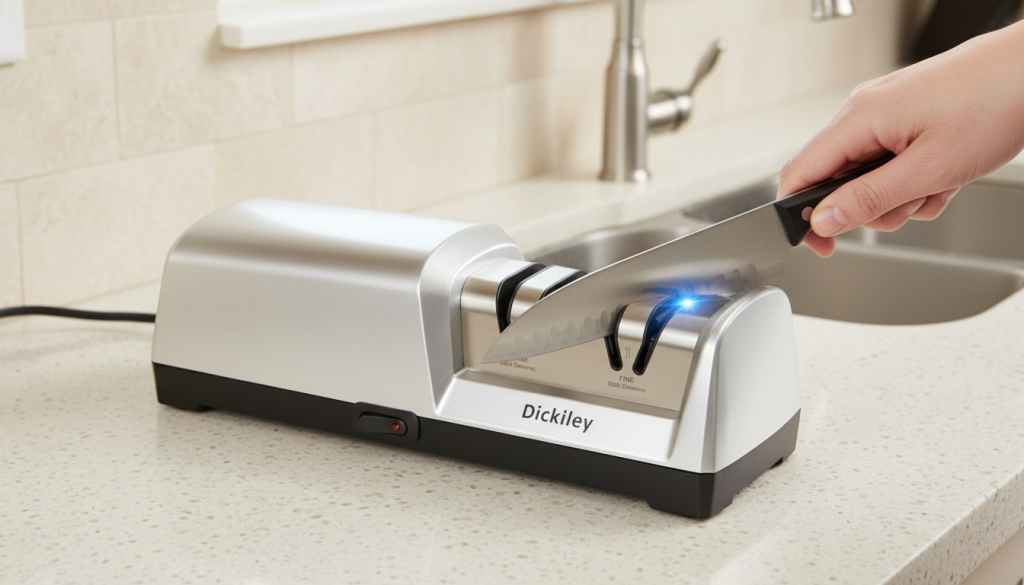
Why it’s beginner-friendly
Two stages = less to think about. It’s the “simple routine” option: restore the edge, then refine it. Diamond abrasives tend to cut efficiently, which helps beginners see results faster.
Best for
- People who want the least complicated sharpener
- Western-style knives that like a 20° edge
Pros
- Straightforward: fewer steps, fewer mistakes
- 20° guide fits many everyday kitchen knives
- Fast improvement without a learning curve
Cons
- Less fine-tuning than a 3-stage system
- If your knife is very dull, you may wish you had an extra stage for finishing
My take: The easiest “set it and forget it” style pick for beginners who just want sharp again.
3) 3-Stage Diamond Electric Sharpener (20° Precision Angle, Black)
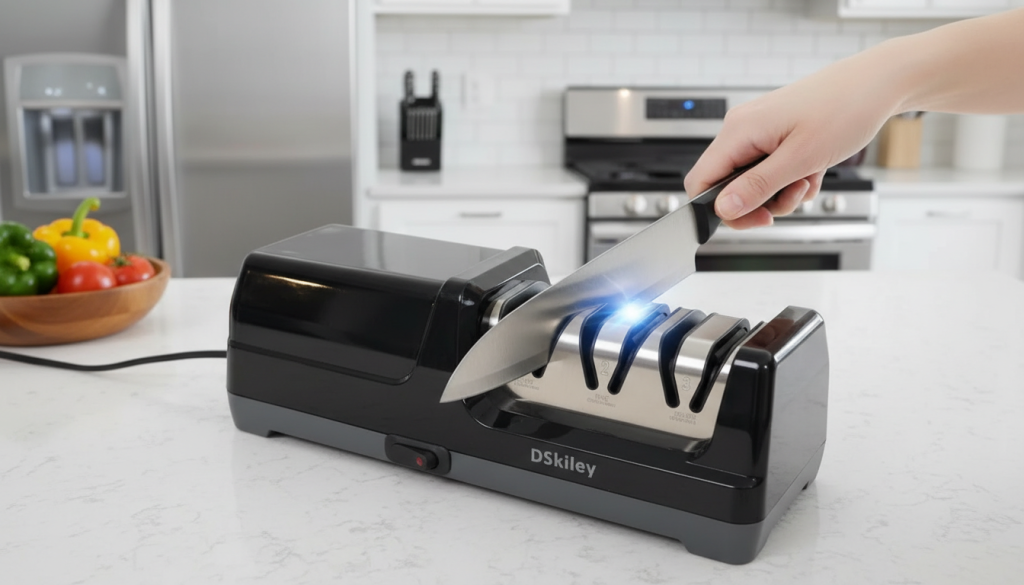
Why it’s beginner-friendly
This gives you the full progression: repair → sharpen → polish. That third stage is what makes the edge feel smoother and less “toothy,” especially for clean tomato slicing and neat veggie cuts.
Best for
- Beginners who want the most noticeable upgrade in edge feel
- Households that sharpen more than one knife type
Pros
- 3 stages = better finish and smoother cutting feel
- 20° guide works well for most Western kitchen knives
- Great for bringing “meh” knives back to life with a more complete result
Cons
- More stages means you need a tiny bit of patience (don’t rush it)
- Overusing the coarse stage can remove more metal than necessary
My take: If you want the most “finished” sharpness from an electric unit, this is a strong choice.
4) Compact 3-Stage Diamond Electric Sharpener (20° Angle Guide, Black)
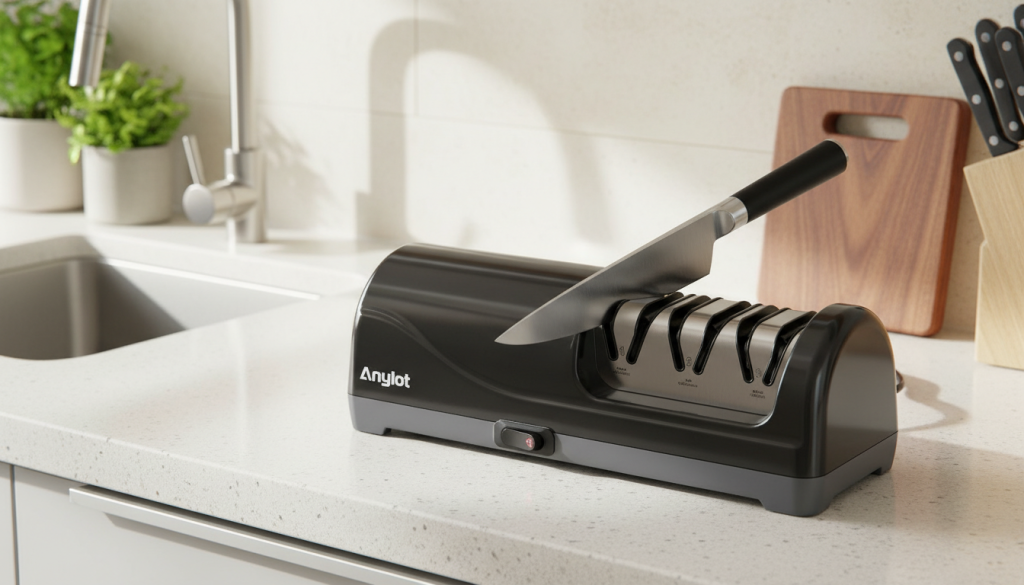
Why it’s beginner-friendly
This style is built around control and convenience—easy to leave out, easy to grab, easy to run a few guided passes. For beginners, a sharpener you actually use beats a perfect one you ignore.
Best for
- Smaller kitchens / limited storage
- Beginners who want quick touch-ups more often
Pros
- Compact footprint, easy to keep accessible
- 3 stages for a cleaner end result than basic sharpeners
- 20° guide suits most everyday chef’s knives
Cons
- Compact designs can feel a little less “heavy-duty” than larger units
- Still requires light pressure and consistent passes for best results
My take: Best “convenience pick” if you want something that fits your kitchen and your routine.
Which One Should You Get?
- Best Overall for Most Beginners: #3 (3-Stage, 20°) — great balance of easy + polished results
- Simplest to Use: #2 (2-Stage, 20°) — minimal steps, still effective
- Best for Thinner / More “Slicey” Edges: #1 (3-Stage, 15°)
- Best Compact Option: #4 (3-Stage, 20°)
My “Optimal” Pick
#3 is the best all-around choice for beginners because 3 stages + a common 20° guide usually delivers the most satisfying improvement without much technique.
How to Use an Electric Sharpener (Beginner-Safe Method)
- Start with the fine stage if your knife is only slightly dull.
- Use the coarse stage only when needed (very dull or slipping on tomato skin).
- Light pressure: let the sharpener do the work—pressing harder usually makes results worse.
- Do a few steady passes, then test on paper or a tomato. Stop when it’s good.
- Finish with the polish/fine stage to smooth the edge.
Big mistake to avoid: doing too many passes “just because.” More is not better.
Honest FAQ (Good for SEO + Real Life)
Will an electric sharpener ruin my knife?
Not if you use light pressure and don’t live on the coarse stage. The biggest damage usually comes from over-sharpening.
How often should I sharpen?
If you cook a few times a week, a light touch-up every few weeks is common. Full sharpening depends on how fast your knives dull.
15° or 20°—which is better?
15° can feel sharper but may be less forgiving. 20° is a durable everyday edge for many home kitchens.